Showing posts with label films. Show all posts

Monday, August 3, 2020

Watching Abbas Kiarostami during isolation

Known to so many a cinephile, his films broadened the space yet tightened the gap between art house cinema and the simple, effortless act of watching a film.


Kiarostami’s movies always ran between fiction and reality, wherein some scenes from his oeuvre show a bite of documentary-like mood. Reversing the stereotype to create his own flavour, the elements of a became truths that one cannot miss—because Kiarostami is a man of urgency.


In presenting his film’s narratives as a bowl full of lies was a cinematic proclivity for him to arrive at the truth without a trace of lie. It is unforced, it did not look like a struggle: it simply just is, and that’s how reality works. 


Marked by scenes of apparent quietness and contemplative, thoughtful conversations, Kiarostami comes to terms with his films both as director and as part of the audience. How he paints the picture of being lost is of another realm: it is not dependent on anything, apropos to nothing, just like loneliness—it can stem from nothing.


In Close Up (1990), the act of blending fact with fiction becomes a blurry experience. Is this a documentary? A drama based on a true story? Kiarostami’s decision to hire the actual people involved a fraudulent crime that actually happened, and reenacting actual conversations, the film achieved a greatness that rarely crowns a director that marks him as prolific. 


Shaping the reality with the words and angling he chose, the film took a turn from being a film to being a slice-of-life sermon masquerading as pure cinematic imagery. You never really learn how to get around Kiarostami’s narrative, and that makes him a positive enigma. 


In Taste of Cherry (1997), the structures of a talkathon engages more than conversations. It is, after all, a man wanting to end his life and talking about his desire to do it three complete strangers he drives around the capital.


The takes flight in long shots, deep silences, and sparse dialogue between the main character, the earth surrounding Tehran’s not yet developed lands, his car, and the people he meets. The emptiness of Iran somehow how filled the story with such grace and meaning that it somehow acts as the purgatory between hell or glory. 


A crucial fact in Kiarostami’s films is its desire to retain its silence yet disquiet treatment of a story and how it should take evidence in the screen. Man’s loneliness manifests in his films like a conversational confession between a doctor announcing to a family that their relative jas succumbed to an illness.


Evening the scope between the personal and the political, Kiarostami never forgets that Iran, a politically challenged nation, also never forgets to clear the coast with talks about the effects of fascism, and what it does to a community, what it does to a man. He never leaves space for cultural myopia to have an exposure. 


In a politically-charged time like this, where majority of the populations is on isolation, it is without question that one must engage in Kiarostami’s features. Because we never know what we find out within ourselves, what we learn about ourselves, in the most intimate ways as his characters find themselves. 

Monday, April 4, 2016

Films Weekly (Week 9)

No Country for Old Men (2007) dir. Coen Brothers
No Country serves as the limbo between the squeamish and the relaxed. Set in this grimy, old town in Texas, the quiet lives of the people are not particularly disturbed, but is still mismatched with how turbulent the protagonists' (and the antagonist's) decisions distressed the the sleepy mood. Much can also be said about the relentless violence that perfectly matches the humor. The sudden drop of temperature you feel when greeted by the deafening silence signals the arrival of the enigma that is Anton Chigurh, the captive bolt pistol-wielding hitman. A "psychopathic killer," he is described as a man with no remorse or compassion--but does every killing with deliberation, using a coin to decide the fate of his victims. This archetype of a villain almost seems perfect, with his almost-silent character as the main protagonist in his own antagonist world. The main protagonist, on the other hand, seized the idea that he could be the hero. Before falling to the hands of Chigurh, we see the inextricable tragedy he is setting himself upon. The progressive underlining of the antagonist's drives at lonely motels and bereft-looking gas stations almost conceives the idea that he is close, and the sudden uncertainty of who should we root for comes into mind. No other movie has played with my morals as ferociously as this one. 

Spectre (2015) dir. Sam Mendes
I can't fully express my disappointment for this last Bond feature with Daniel Craig without highlighting the bad quality of acting, the patronizing portrayal of women, and the poor character development. Yes, we've known Bond for centuries now, but they could have done added a little spice to Craig's character, as this would be his last one. There was no sense of thrill, making it look like a recycled bowl of Just Make the Goddamn Movie. It was tired and I found no motivation to watch it again in the near future. Unlike Skyfall and Casino Royale, the calamity perfectly dogged along with the enjoyment. 

Gangs of New York (2002) dir. Martin Scorsese
The America shown in this film was not the bright land we all envisioned. Instead, it was seething with fear, neurosis, and flawed governance. Graft, corruption, and larceny were expressed in a manner so great that it tops any of Mr. Scorsese's past character and story debauchery. He rapaciously recreated something from the twentieth century that it sends the notion that someone watching this in the twenty-first century surely felt agitated. His penchant for street-style mobs were elegantly wed with the Old New York--something that fits perfectly, with the unruly crowds and loud music. A man of genius in the acts of lawlessness, Mr. Scorsese addressed the ethnographic sensibility of the characters, making it an important movie. It wasn't polite in the sense that it shouldn't be, and the misfortunes were not stylized. Mr. Scorsese doesn't ever push his motives, but it does leave something for our eyes and mind alike to feast on. 

Ex Machina (2015) dir. Alex Garland
With the turn of the century, the innovation of technology is very unlikely to cease. It's a fast-paced corroborative act done by humans and, true enough, it's become smarter and more conscious than the normal human mind. A machine outdoing a human is not impossible, and it's such a shame. They are becoming aware, and it's scary to think of a world localized by machines, and Ex Machina proves it to be that disturbing. It's a philosophical movement, in a way that man is God, and the robot is the creation; man treats himself as the messiah of a dying breed when he created a thinking machine--so strong it challenged (and defeated) him. It was an unexpected turn of events, with the gentle reminder at the end that we, too, were fooled. Certainly not a shallow play, it has no room for conventionality: modernity is played out with the helpful guidance of the olden teachings, bowing to the Greek idea that revolves around the deus ex machina doctrine. Somewhat a shameful ode to the fall of humans to decompartmentalization, this wit-wrenching gem will surely live on as a harsh reminder that we can be gods, but only for a little while.

Fargo (1996) dir. Coen Brothers
Set in a mundane town, the Coen brothers are at their height of exploration when the focus on murder and calamities that hit the characters was swerved away by the gentle remarks of awkwardness among the protagonists--therefore adding lightness to the mood. The most prominent hero in the film, however overshadowed by the occasional panning of the camera to the statue of Paul Bunyan, is the very pregnant Marge. This factor shed some light on the darkness that looms around the characters as it redeems the noir-esque atmosphere. The remoteness of the setting makes up for the thick plot line, a sharp contrast so eerily portrayed. The torridness of violence in this movie runs so fast it appears to be comical. Dreamlike, the Coen brothers envisioned a turbulence that masked itself as a calm wave. 

Friday, April 1, 2016

Films weekly (week 8)


Before Sunrise (1995) dir. Richard Linklater
Conversations and intimacy were happily wed in this film, and nothing has beat it ever since. The natural freshness of the characters and their approach towards life in general is very bright yet off-putting at times--it was as if listening to two people who have lived enough to know and not know everything. You are suddenly so clueless about everything yet full of facts and feelings when you know you're on the verge of vowing your love for someone. That stage in a budding relationship was thoroughly discussed in this film, through poetry, casual communication, and physical contact. It was altogether an ergonomically directed film, for it has proven its position as a reference for some who are dying to know what being with someone is (at least for me). Capturing the unrelenting beauty of Vienna, all the fast get-acquainted scenes between Jesse and Celine are easily forgotten with the sharp use of words that smoothen the surface of the plot. Somehow the fast-paced chemistry between two people won't matter as soon as they start conversing.

Ocean's Eleven (2001) dir. Steven Soderbergh


The drab, carpeted humor in this film is equivalent to the enigmatic movement of story. The dialogue is not as economical as the flow, but it did embellish the boredom of the main character, Danny Ocean. The overt charisma of the actors is obviously an alas for the story, but it did not show much of its use as a card to provoke and fascinate the audience. Perhaps the cultivated identity—the celebrity aura—of the actors were treated as if it’s of great significance, which appeals to me as something off-putting. It’s as if its roster of people were the only factors that pronounced the film. The candy-glazed look of the scenes, however, blew a bit of life into the disturbingly senseless purpose of the plot. It was alive, playing with your eyes with what it wants and doesn’t want to see. Despite the detached morality and goals of the film in general, which left me confused the whole time, it did exhibit the smooth ways it passed through to reach the height of its ending.

Ocean's Twelve (2004) dir. Steven Soderbergh

Not as sugarcoated as the first installment, but still stands to be as lackadaisical. Still an artificial attempt to portray an old man's bore, it deems itself to be a failure in showing the illegal-yet-lawful caper that occurred. It turned out to be a talent showcase on how to get away with robbing millions, but it did not show much of the anticipated thrill you get when you're on the run on a gambol with men you barely even show enthusiasm to talk with. The unbridled humor and the smart movement of the actors with the story were in perfect harmony, but would eventually be interrupted by the deflection of any fun by the unabashed exhibition of cocky dialogue and pushy wordplay. Ocean's Twelve gives off the idea that's it's the most fluid genius of its era, but is really just another greased-up tool. 

Ocean's Thirteen (2007) dir. Steven Soderbergh 
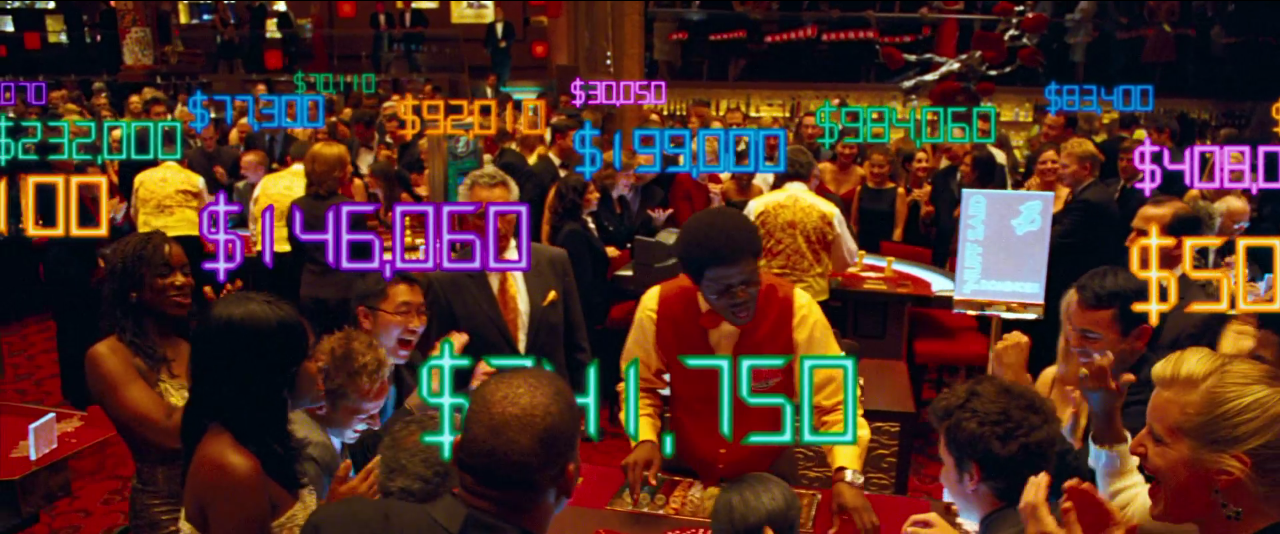
As enchanted as it may look like at first glance, the director still forgets to flog his own flair for the dramatic. Though as similarly over-emphasized as the first two installments, the third could be identified for its excessive use of reds and sudden booms of blue to move along with the characters' moods. It was scene-wise, but still as ludicrous as Al Pacino's fake tan. The fabricated disaster (the fake earthquake) was the last straw for me; it wasn't realistic, and is very self-indulgent in all its forms, with its know-it-all and forced wisdom attitude. The hunger for power and greed were over-glorified, and creatively speaking, it wasn't very wise.

Up in the Air (2009) dir. Jason Reitman
Closed up on the affairs of your loved ones and greatly bashed by the popping of your ears once in a while could be the best and worst things one could imagine. In the era of a barely-breathing America with its economy digging up its own grave, one is expected to expect the unexpected. It's a hard place to live in, and this film perfectly proved that there are great things out there, only to be disappointed in the end by impassable heartaches. To have this rough job smoothly played out by Clooney is a pleasure; seeing him disconnected from his George Clooney identity and see Mr. Bingham could be a feast for one's eyes. The story was built up to have a bumpy ending (yet still acceptable). It was carefully thought of, with the heartbreaks at the right places. The traditional setting wherein a woman is merely just a prop was stashed away, with Anna Kendrick acting as Clooney's equal, not as his inferior.  The dialogue was simple yet affecting, a mouthful yet still economical, and permanent yet transcending. It used up all its strengths to show that the film isn't one simple plot that ends with a single conclusion. It also shows just how agonizing and relaxing it is,at the same time, to live and move.

Tuesday, February 23, 2016

Films Weekly (Week 7)

About Time (2013) dir. Richard Curtis
The trademark of a British love story is the slight enhancement of charm, excellent articulation of feelings, and of course, hopelessly hopeful representations of the lead. Tim, a boy who always did things on a whim after learning that he could travel through time, was this smart, yet uncomfortable in knowing that he could do things. Domnhall Gleason played his part perfectly, with his frail decision over life's staggering storm, and a poor understanding of love. It's quite a jump from his previous job as Bill Weasley--his most brooding role yet, for me--and there's pleasure in knowing that he's this versatile man who has a thousand identities through the characters he cultivated from acting. The rest of the cast was, obviously, as gallant as Gleason himself. They hyped the story, and fluidly moved along the mood of the story. However, what saddens me was the flow of the story, and how it was structured into something so perfect. There was a climax, yes, but it wasn't represented as much as it did justice to the lead's time travel feats. It felt like there should be a strong reminder about the consequences of incoherent decisions and how it's deluding you with an easy way out, but I saw nothing; it was completely all about Tim's journey through life, through the eyes of time. But what redeems the lapse in the story was the careful impression of life as this sometimes comic, sometimes heartbreaking, and sometimes flimsy game. Richard Curtis must be this romanticist whose genius immaculately collaborates life and love into this strange-looking concoction of pain and pleasure. And you would always want to have a little taste.

Chef (2014) dir.l Jon Favreau
I consider this as one of Favreau's weakest peojects yet. It was enlightening (and mouth-watering), yes, but it did seem like there was something missing. His films from my childhood (like Zathura) that still wowed me to this day will always be a reminder of how good he is as a man with a penchant to the cinematic simplicity of adventure, but this one is a weak proof that he is still the same man. The actors, however, were in good shape, with their well-exhibited exuberance. But the female protagonists looked like accessories to this film, and no one wants that. It looked as if they were only there to feed the male lead's ego, and to fulfill the ending everybody wants: a wedding. Considering the fact that this was inspired by Jiro Dreams of Sushi and Eat Drink Man Woman, it would be a misguiding statement if we were to attribute this to few of this century's greatest food epics. The storyline was weak as the Cuban sandwiches were strong.

Thursday, February 18, 2016

Films Weekly (Week 6)

Inside Llewyn Davis (2013) dir. Coen Brothers
The darkness that looms through this film is somewhat contrasting to what it tries to convey. It's nothing short of a masterpiece, another one from the Coens. They were big names from my childhood and it's truly a blessing that I reached this age to finally understand their language as filmmakers. The film had that similar film to their past projects: dark and harrowing, with stories from the past too complex to wrap your head around. The actors, as gracefully and as gallant as they can be, emitted something strangely good, as they take parts into these characters' life--clearly blurring the lines between actor and character. I did not for one second see the faces and auras of these people as personalities from the hollywood industry. They earmarked the start of a new standard of acting,and this story is too lucky to have these people act out the parts.

Tracks (2013) dir. John Curran
This film won't even make it to my list of cinematic projects, but it speaks so much to the people who are looking for something untroubled yet so drastic. The film takes on a low-energized stream of the story; it was lazy but you stay anyway because you need to know what happens next. What it lacks in cinematic magic, it makes up for the marvelous storytelling.
Architecture 101 (2012) dir. Yong-Joo Lee
this movie made me feel nothing but sadness to the core. It was simple, without the unnecessary shit. The story takes a turn on the right edges, and it was delightfully portrayed by the actors who seemed like the characters themselves, as they live through the words with pure, burgeoning emotion. This literally sent me to tears, with the director's genius popping out at the right places.

Leon (The Professional) 1994 dir. Luc Besson
It doesn't do so much about being the touchstone movie that reincarnated the amoral soul in everybody else, because the character himself a true-blue sentimental man of his own. He doesn't know it at first, but he is later on reminded of his true forms when he met a little girl who lived in this sordid apartment she shared with her dysfunctional "family". He is later on reminded of the struggles of having emotional attachment to something or someone, and the scenes that show us his slow act of giving in to emotions, no matter how he kept his face blank, is one of the most irrevocable sights in film. The innocence of the girl, which was violently snatched away from her, was awe-striking in a way that it was synonymized by her savage actions, relentlessly dictated by her vitriolic words. The film paved the way, I believe, for the new face of morality, deceit and the ferocious truth about killers: with judgment comes the actions you will eventually act out.

5 Centimeters Per Second (2007) dir. Makoto Shinkai
It's a simplistic way to remind us that impermanence will always cause us to be somewhere. It was short-lived, the movie, but it perfectly stated its one true goal and that is to show us the beauty of separation and indifference towards distance and the future. It was pure, heartbreaking yet refreshing in a way that it takes the audience. The cinematography brought the movie back to life in times of dead scenes; the sadness you may feel when you see the pain on the screen was redeemed by the extravagant colors. It makes the movie look as if it's picked up from a garden, once glorious with its colors but killed by the time that passed by but still have the glory reminiscent of the past.

Bridge of Spies (2015) dir. Steven Spielberg
Another film that glorifies the achievements of the whites when all the main character ever did was two bring back two Americans back to their country. It's a tiresome plot, believe me, and I still can't believe why no one is screaming of exhaustion. I do loved Tom Hanks acting here; it was logically put together, and he was well-meaning than ever. But to put this film on an artistic pedestal would mistreat other worthy films; it's a turn from Spielberg, yes, but it didn't so much than to compel me of the struggles of the ones living in Germany. I wasn't so much disheartened by the scenes that were supposed to make me feel something--it was trying hard, Spielberg was clearly pushing his belief that this would be of cultural value, when it wouldn't be so much as a showing off of privileges and its fake ability to earn attention. Perhaps the historical context would send the audience to a patriotic daze, but it was also disregarded in a sense that you can only see false adoration. I do respect the people involved in this story--the real ones--but the film was poorly produced that it seemed like a rushed work, gently reminding us that whites could easily earn respect by doing the simplest things.

Monday, January 18, 2016

Films Weekly (Week 2) NOW WITH SHORT REVIEWS!!!! YAY!!!

#WalangForever (2015) dir. Dan Villegas
First of all: let's discontinue the use of this term. There are far more advantageous ways to articulate our cynicism towards the idea of love and its perpetuity. But in the midst of all this linguistic drama, it can't be denied how this film bows to traditional Filipino film making: it's lucrative, judging from the amount of audience owing it their own positive judgment, and, no matter how annoyingly undeniable, that's the way the Filipino mind works. A romcom movie wouldn't hurt the heart (and mind) so bad, despite the possible fragmentation that might occur as we delve in deeper between the characters' mind. 

To better word it, this movie only gave us temporary strength when it comes to seeing what the heart truly wants (or needs). I love the movie, despite having a slight resemblance with The Fault in Our Stars' plot. Maybe my first statement about love and its uncertainty was propelled by the mishaps I have encountered. Maybe not.

Maybe we can talk about this? Contact me. Charot.
 
Barry Lyndon (1975) dir. Stanley Kubrick
Stanley Kubrick's most critically acclaimed work may not be one for the books for me, but it did pull something at me: Barry Lyndon's incapacity to stay at ease. He is an impulsive man with dreams of being at the top of his game. Much like the generation I fall under. The character's impermanence stays as the main identity of the film, and we all know Kubrick evokes every detail off the characters and the scenes they are acting. Being a book adaptation, Kubrick is given the novel as a guide, and he greatly put the words into fine photoplay. I haven't read the book (nor will I ever give it a try, apologetically), but it does look like a detailed visual orientation of the life of Barry Lyndon. 

Kubrick definitely does not consider film making as a task. It's a commitment for him, and this film would greatly prove it. 

 Beetlejuice (1986) dir. Tim Burton 
I've seen this movie before, and seeing it again as an eighteen-year-old girl made me miss how much I got scared over everything as a child. Winona Ryder once again wooed me into the world she lived in when she was just a cutesie adolescent. Flawless as ever, her act as a confused, scared, gothic child of two completely antithetical parents sparked something in me, now a full-grown (sadly) girl: you can be everything you want and still do great.

Also Alec Baldwin was such an eye candy.

Being John Malkovich (1999) dir. Spike Jonze
I've always hated the idea of someone having the knowledge of what I truly feel. They start acting like you owe your devotion to them, and worse, they may never see you as the same person they knew before, which is unsettling because it would never have been this way if only they were more cautious of their own ego and pride. Spike Jonze put me in great discomfort when I first saw this film. He, once again, made me want to destroy artificial intelligences. I couldn't wrap my head around the idea of having someone live and inside you, and have total control of your emotions. I've been tormented before by some of my mean and do-nothing classmates from elementary, and I guess this film is the worst representation of bullying: making someone erase their own identity and putting them to absolute hell. 

An Education (2009) dir. Lone Scherfig
Lesson: do not, and I mean do not, put your whole life behind your back for a stupid boy or girl. Jenny Mellor (auspiciously played by Carey Mulligan) was downright dumb when she let herself in too deep. It was love, she saw it. I saw it, but the excruciating pain of putting your future at the edge of a bridge will never be worth it, especially if you were told of its consequences when everything is too late.

The thing I absolutely loved about this film is the director's brave accusation of girls being dumber than ever for someone who showed her gold (only to find out that it has the lasting shine of a plastic container), yet still finding unbelievable ways to redeem themselves and have the strong ability of conquering the best and worst of both worlds: being in love with someone and loving themself so much they start being great. 

So here's this film for all the daft, vapid, and unreasonable commitments I have yet to put myself into, all for the promise of love... and the idea of forever. Charot lang ulit. 
Blue Velvet (1986) dir. David Lynch
I never got the essence of the whole film. I liked it some, but not really one of the films I'll see for a second time. It was great, in all of its anonymous glory and the characters' mysterious roles in their town. But I guess it didn't have that lasting effect I was looking forward to seeing in this film. 

Dream Girls (2006) dir. Bill Condon
I can't stress enough how much I adore girl groups. They're so powerful, with their songs tugging you hard enough to make it feel like you're being invited at a revolution that fights for the most crucial things on earth, like discrimination. It's an empowering movie, with the true portrayal of ostracism between girls and how it ruins the camaraderie they cultivated as sisters. 

The singers were as talented as ever, and you can't the deny the power they evoke while playing the characters of desperate singers. Of course, Beyoncé shined in this movie, but you really can't deny that all of them conjured the same amount of shimmer and power. Bill Condon really put up a show that put all the actors at the spotlight. DEFINITELY ONE OF MY NEW FAVORITE MOVIES.

Body Double (1984) dir. Brian de Palma
This movie creeped the hell out of me!!! I didn't know about the real Always Mind Your Belongings and Lock Your Doors Before Going To Sleep stages of living (and surviving). It was a trip over to Mind Fuck and Brian de Palma's own set of aesthetic style was a plus one. The music used for the "telescope scene" in the protagonist's borrowed home was both enchanting and awfully disturbing. It's an eerie kind of beautiful, because, hey, who would want someone staring at you over their windows as you do your business in your room? This is a new kind of abduction, with your privacy being taken from you without your consent. 

But the cinematography pays off, in all its lightly colored magic, juxtaposing the movie's whole representation of murder and assault--the Real World.

Chinatown (1974) dir. Roman Polanski
If you've ever wondered how Jack Nicholson acquired his penchant for bluffing in films, maybe this film might help you as a guide. He is unapologetic, and does not play for mild-minded audiences. You never really know if he's the character you should root for, or if yo should antagonize him for the rest of your life because his acting is so well-grounded. Polanski remains to be one of the greatest filmmakers of this century, we can't deny that, and his work for this film does not beg to differ. The man has cultivated such an identity that you can't deny the unwavering power he has over his characters and the dark story behind their woes. He really is a great storyteller.

Eat, Drink, Man, Woman (1994) dir. Ang Lee
I've come to realize that Ang Lee's eastern projects are, by far, more exceptional than that of his western projects. It was very well-written, and never did it bother to be deep and have ambiguity that are sometimes (badly) represented by directors. I don't know, maybe it's my undying affinity for Asian films. the unexpected turn of  events sent me reeling (for answers) from both hilarity and sadness. Ang Lee clearly delved into the characters' inner beliefs and, as genius as he can get, performed them purely on camera, with the actors paying great deal to the characters' own woes. 

And this is just another reminder that food is LOVE.
Eraserhead (1977) dir. David Lynch
This movie was very surrealist as it can get. David Lynch didn't fall into pastiche with this movie and you can definitely see his effortless work on propagating a normal outlook on the part of the audience. It's as if watching the normal life you lived get disturbed by something so unusual. The setting was as terrifying as it is very typical for the characters, another thing abnormally beautiful about the whole feature. 

I never stopped thinking about living in a world like this; it literally sent me shivers. I love how I got scared of a horror movie, for the first time in forever. 


Monday, January 11, 2016

Films Weekly (Week 1)

I think it's about time I set my priorities right. I've been dreaming of having something I could use to track the films I've seen for the year, other than the film journal I've just curated late last year. It's still on the works; I want it to be perfect. But this will do, for now. I could only hope for a ~filmic~ year this 2016!!!

The Skeleton Twins (2014) dir. Craig Johnson


Welcome To Me (2015) dir. Shira Piven


American Graffiti (1973) dir. George Lucas


Apocalypse Now (1979) dir. Francis Ford Coppola


Back To The Future Part II (1989) dir. Robert Zemeckis

A Very Murray Christmas (2015) dir. Sofia Coppola


Catch Me If You Can (2002) dir. Steven Spielberg 


The Aviator (2004) dir. Martin Scorsese 


Sid And Nancy (1986) dir. Alex Cox


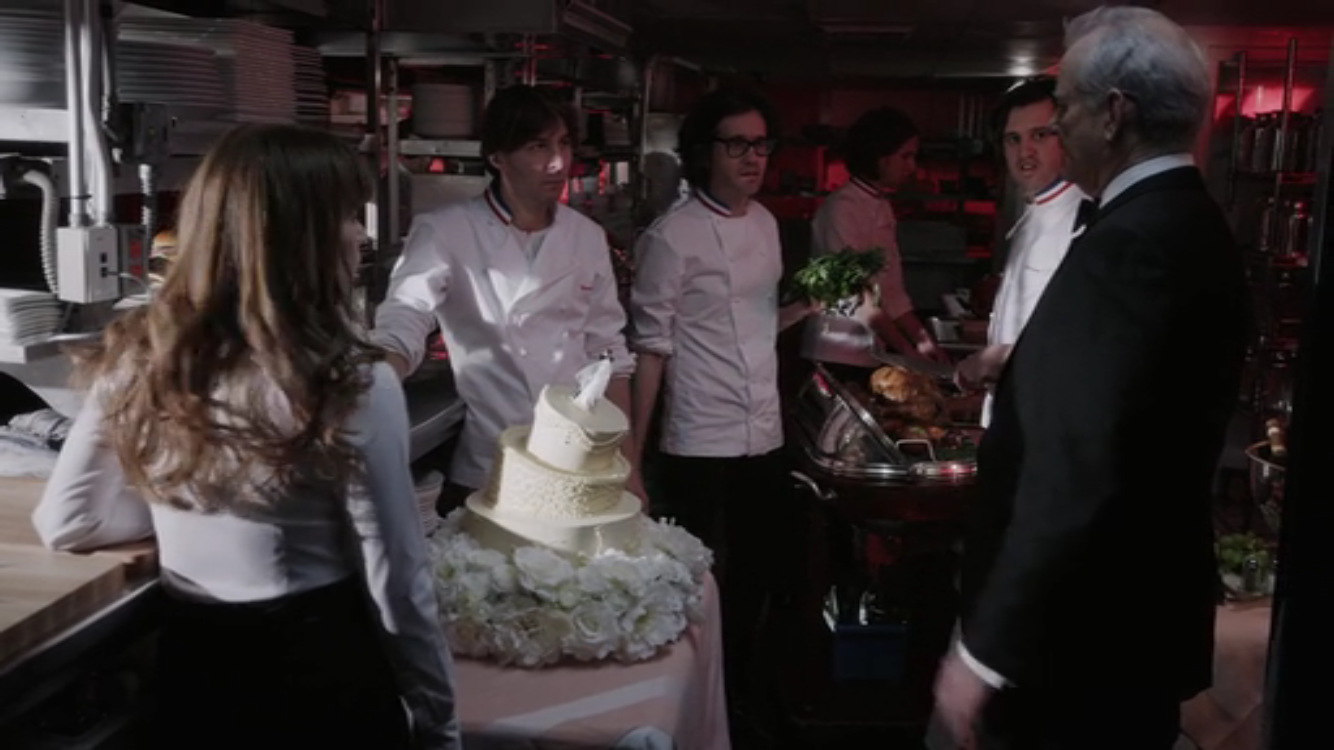
The Conversation (1974) dir. Francis Ford Coppola